Commercial Waste Disposal Rules Every Business Should Know in 2025
Managing commercial waste correctly is an important part of running any business. From proper waste disposal and recycling to understanding legal responsibilities, businesses in England must follow strict regulations when handling rubbish and trade waste. Failing to comply with waste legislation can lead to fines, enforcement action, and unnecessary waste management costs.
This guide explains the key commercial waste disposal rules businesses should understand in 2025, including waste collection requirements, recycling regulations, and how to remain compliant.
Table of Contents
What counts as commercial waste?
Commercial waste includes any waste generated through commercial activity. This may involve paper and cardboard, food waste, packaging, and general rubbish produced by businesses in England.
Different types of waste require different disposal methods. Some materials may also be classified as controlled waste or hazardous waste depending on their contents.
Why are waste disposal regulations important?
Waste disposal regulations exist to protect public health and reduce environmental impact. Businesses that produce waste have a duty of care to ensure materials are handled correctly.
The Environmental Protection Act 1990 outlines many of the legal obligations linked to commercial waste disposal. Failure to follow these rules could result in a fine or further enforcement action.
What is the duty of care for business waste?
Every business has a duty of care when managing waste. This means businesses must store, transport, and dispose of waste safely and legally.
A licensed waste carrier should always be used for waste collection and disposal. Businesses should also receive a waste transfer note showing where waste has been taken.
Why should businesses use a licensed waste carrier?
A licensed waste carrier ensures waste is collected and processed legally. Using licensed waste providers also helps businesses remain compliant with waste regulations.
If waste is handled incorrectly or fly tipped, businesses may still face prosecution. Working with a professional waste carrier reduces this risk.
What are the new waste regulations in 2025?
The new waste regulations linked to simpler recycling aim to improve recycling rates across England. From March 2025, many businesses will need to separate waste streams more carefully.
Businesses in England may need separate bins for paper and cardboard, food waste, and recyclable materials. These changes support resource efficiency and help keep waste to a minimum.
How does the waste hierarchy affect disposal?
The waste hierarchy encourages businesses to reduce the amount of waste they produce before considering disposal. Reuse and recycling should always be prioritised where possible.
Sending materials to landfill should be treated as a last option. Businesses that recycle waste effectively can lower waste management costs and improve recycling performance.
What rules apply to hazardous waste?
Hazardous waste includes materials that may pose risks to health or the environment. This can include chemicals, batteries, and certain forms of medical waste.
Specific regulations apply to hazardous waste storage and disposal. Some businesses may also require an environmental permit or consignment note for transport.
How can businesses improve waste management practices?
Businesses can improve waste management by separating recyclable materials and reviewing waste generated across operations. Regular audits help identify ways to reduce waste to a minimum.
Effective waste management practices also help businesses ensure compliance and improve operational organisation. Proper storage and disposal systems reduce disruption and improve workplace safety.
Why is recycling important for commercial waste management?
Recycling helps businesses recover waste materials and lower environmental impact. Materials such as paper and cardboard can often be reused or processed into recyclable products.
Commercial waste management strategies that prioritise recycling also support producer responsibility goals and help businesses remain compliant with waste legislation.
What documents should businesses keep?
Businesses should keep records linked to waste transfer and disposal. A waste transfer note provides evidence that waste has been collected by a licensed waste carrier.
Certain hazardous materials may also require a consignment note. Keeping accurate records helps businesses ensure compliance if inspected by local authorities or the Environment Agency.
How can businesses ensure compliance in 2025?
To ensure your business is compliant, it is important to understand commercial waste regulations and review current waste management in England regularly.
Businesses should use licensed waste providers, separate waste correctly, and follow all legal requirements linked to waste disposal services. Reviewing procedures before 1 April can help businesses prepare for upcoming regulation changes.
Key things to remember about commercial waste disposal
- Commercial waste must be managed according to waste disposal regulations
- Businesses have a duty of care when handling business waste
- A licensed waste carrier should always be used for collection and transport
- Waste transfer notes help prove waste has been properly disposed
- Simpler recycling rules from March 2025 may require separate waste bins
- Hazardous waste is subject to additional legal requirements
- Recycling and reuse help reduce landfill use and improve resource efficiency
- Businesses should review waste management practices regularly to remain compliant
WasteXpress
Get in touch with our friendly team, we provide accurate quotes within 5 mintues!
Table of Contents
REad more
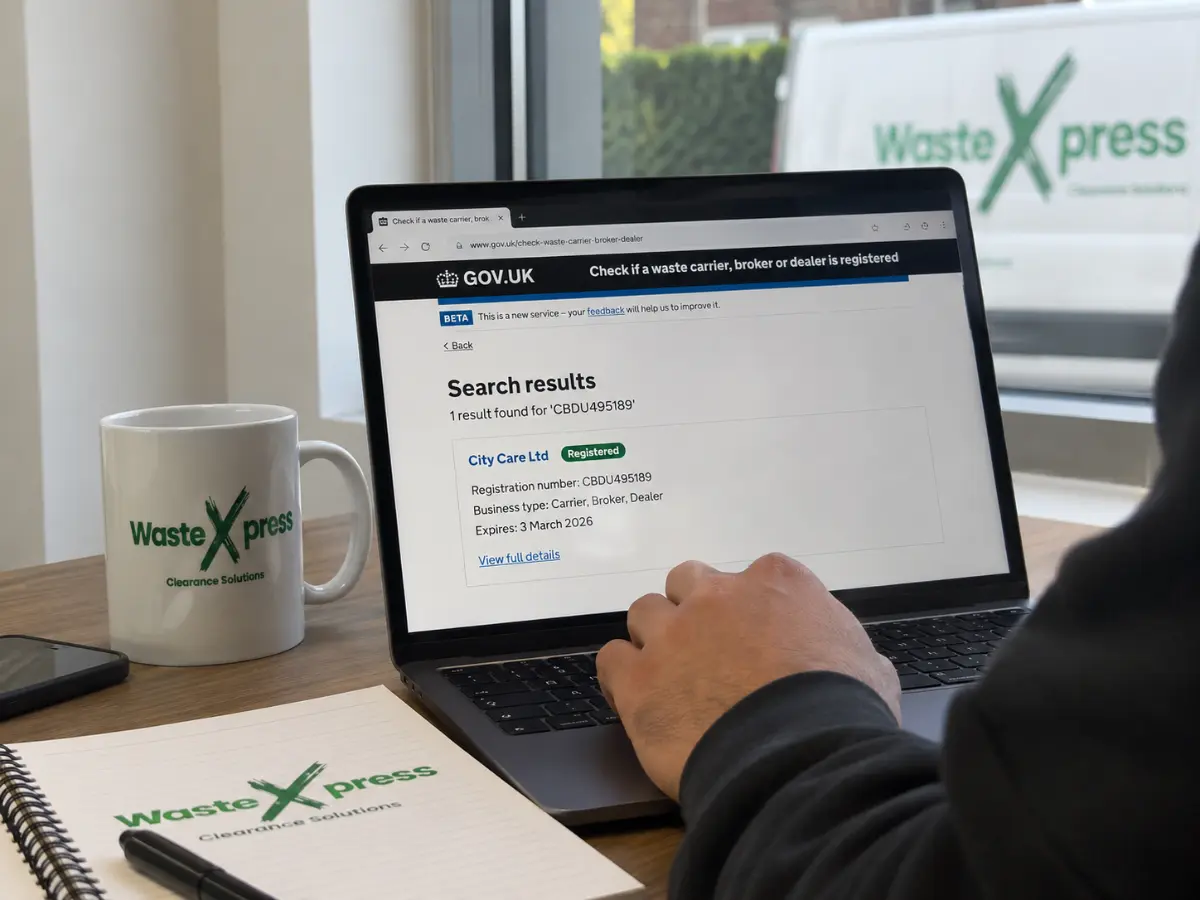
A legitimate rubbish removal company should prove it can carry waste legally, explain where rubbish goes and provide the right...
When you have waste to clear, the choice often comes down to rubbish removal vs skip hire. Both can work...
The cost of rubbish removal in Manchester depends on several factors, including how much waste needs collecting, the type of...
Using the wrong company to remove rubbish can create far bigger problems than an untidy driveway. If you use an...