What Is a Duty of Care for Business Waste? A UK Guide to Waste Duty of Care
Every business that produces business waste has a legal duty of care to ensure it is handled correctly. Whether you run a shop, office, warehouse, or construction premise, understanding your responsibilities under the Environmental Protection Act 1990 helps you stay compliant and avoid costly penalties. This guide explains what the waste duty of care means, why a waste transfer note matters, and how to dispose of waste legally in the UK.
Table of Contents
What Is the Waste Duty of Care?
The waste duty of care is a legal requirement under Section 34 of the Protection Act 1990. It applies to every business that creates commercial waste or controlled waste.
Your legal obligations include storing waste securely, ensuring it is collected by an authorised company, and preventing harm to the environmental or human health.
Who Has a Duty of Care for Business Waste?
If you produce waste, import goods, transport waste, or arrange its waste collection, you have a duty of care.
This includes business owners, landlords, contractors, a broker, and any organisation whose waste leaves your premises.
What Is a Waste Transfer Note?
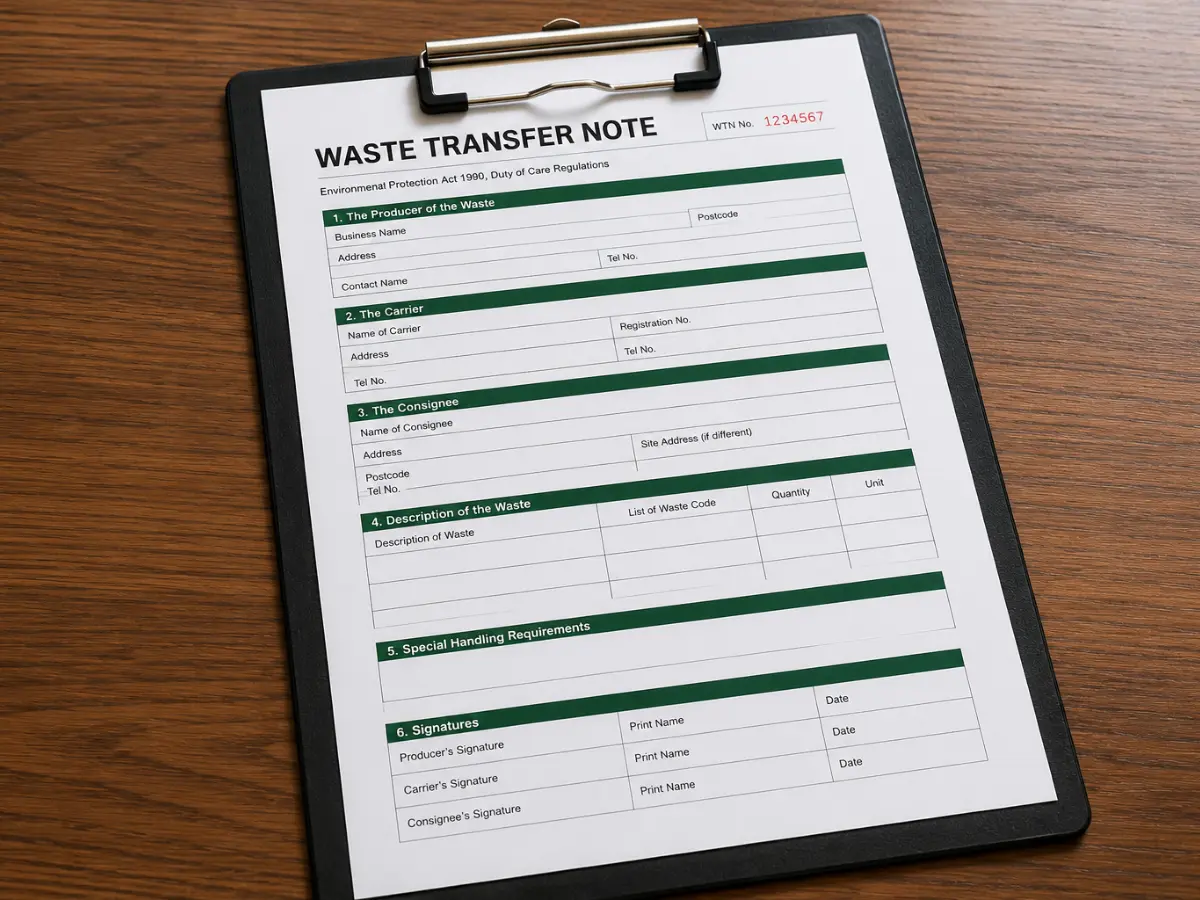
A waste transfer note (WTN) records every load of waste that changes hands. The waste transfer document confirms what type of waste was collected, who removed it, and where it is going.
Your WTN must include the required information, and you must keep WTNs as part of your business documentation for inspection if requested.
Who Can Collect Business Waste?
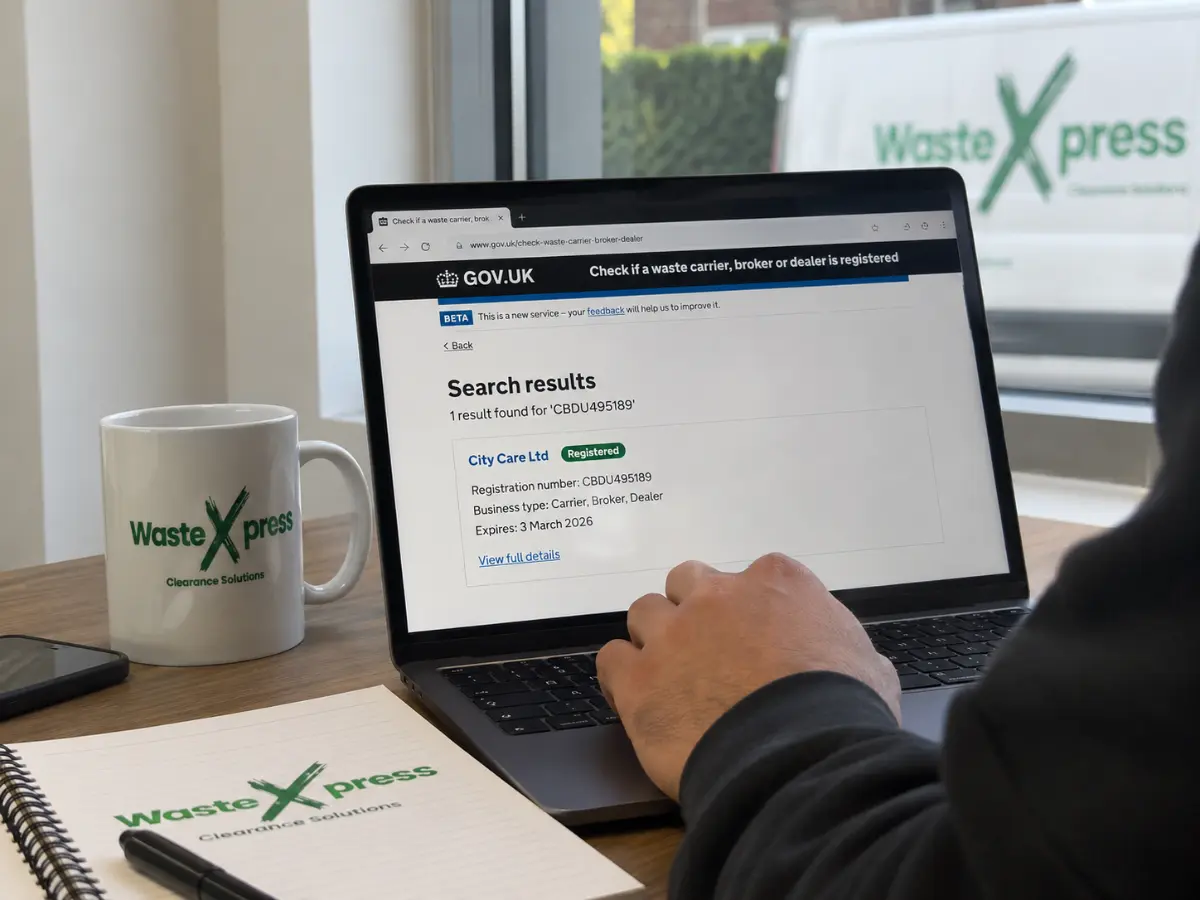
Only a licensed waste carrier or another authorised person should remove your waste.
Before arranging a collection service, check the company’s registration on the public register. This helps ensure your waste is handled legally and not passed to an unauthorised operator.
What About Hazardous Waste?
Some businesses generate hazardous waste, such as chemicals, paint, batteries, oils, or electrical equipment.
Unlike non-hazardous waste, these materials require additional controls, specialist disposal, and sometimes an environmental permit before they can be transported or treated.
Can Business Waste Be Recycled?
Yes. Businesses should aim to reuse and recycle materials wherever possible while keeping waste management efficient.
Separating each type of waste also helps keep waste to a minimum, reduces landfill, and lowers disposal costs.
What Happens If You Don't Comply?
Failure to comply with your duty of care requirements can lead to enforcement by the council or the Environment Agency.
Depending on the breach, businesses may receive a fixed penalty notice of £300, further enforcement action, a larger fine, or even prosecution for a criminal offence.
Where Can You Find Official Guidance?
The latest guidance is available on gov.uk, covering waste legislation in England and Wales.
You should also follow the official code of practice to ensure your business remains compliant with changing regulations.
Key Things to Remember
- Every business has a legal duty of care for the waste it produces.
- Always use a licensed waste carrier.
- Keep a valid waste transfer note for every relevant collection.
- Separate waste to reuse and recycle more materials.
- Handle hazardous waste differently from non-hazardous waste.
- Failure to comply can result in fixed penalty notices, prosecution, or other enforcement action.
- Check official guidance on gov.uk and ensure your business remains compliant with UK waste
WasteXpress
Get in touch with our friendly team, we provide accurate quotes within 5 mintues!
Table of Contents
REad more

Whether you're moving premises, ending a self storage rental, or simply clearing out your storage, tackling a packed storage unit...

Whether you're preparing a property for sale, dealing with a bereavement, moving home, or simply decluttering, arranging a house clearance...

Every business that produces business waste has a legal duty of care to ensure it is handled correctly. Whether you...

Getting rid of an old sofa isn't always straightforward. Whether you're replacing worn-out furniture, moving home, or clearing unwanted items,...