

Office Clearance Checklist: Everything to Remove Before You Hand Back the Keys
An office clearance involves more than taking away desks and emptying cupboards. Before returning a commercial premise to a landlord, businesses must remove furniture, IT equipment, documents, rubbish and any items that are not included in the lease handover.
This office clearance checklist provides a clear, practical process for planning the work, choosing a contractor and checking the office space before the keys are returned. Following this simple checklist can help you avoid delays, additional rent and unexpected landlord charges.
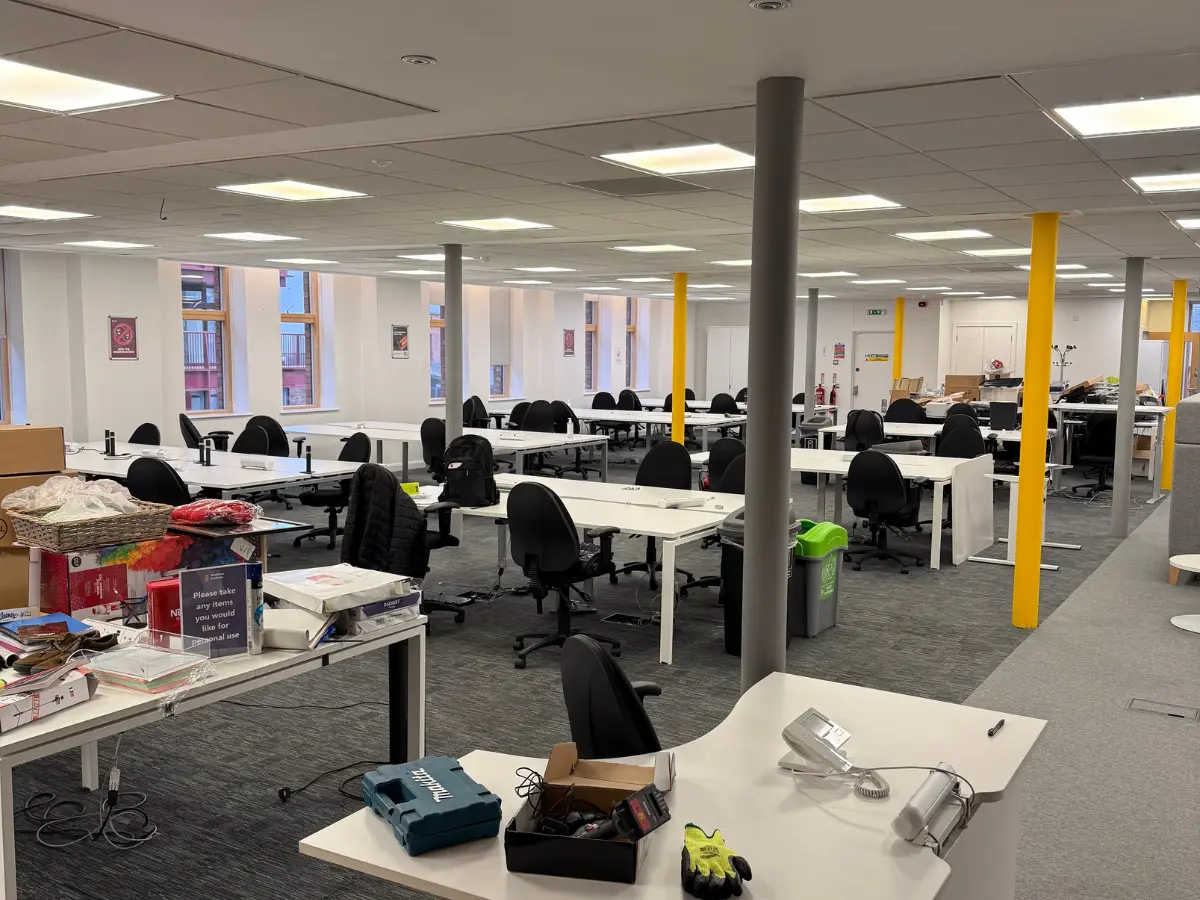
Table of Contents
When Should You Start Planning an Office Clearance?
Work backwards from your lease expiry or agreed handover date. Planning an office move several weeks in advance gives you enough time to decide what is going to the new office, what can be reused and what will need disposal. A large office may require several collection days, particularly when furniture needs dismantling.
Build some contingency into the schedule. Do not arrange the main office clearance for the final afternoon of the lease. Leave time at the end as a contingency in case the clearance takes longer than expected or extra rubbish is discovered. Careful planning and project management can prevent additional rental costs and last-minute pressure.
Choose one person, such as the office manager, to coordinate the process. They can create clear groups for items to keep, relocate, sell, donate, recycle or dispose of.
What Office Furniture Must Be Removed?
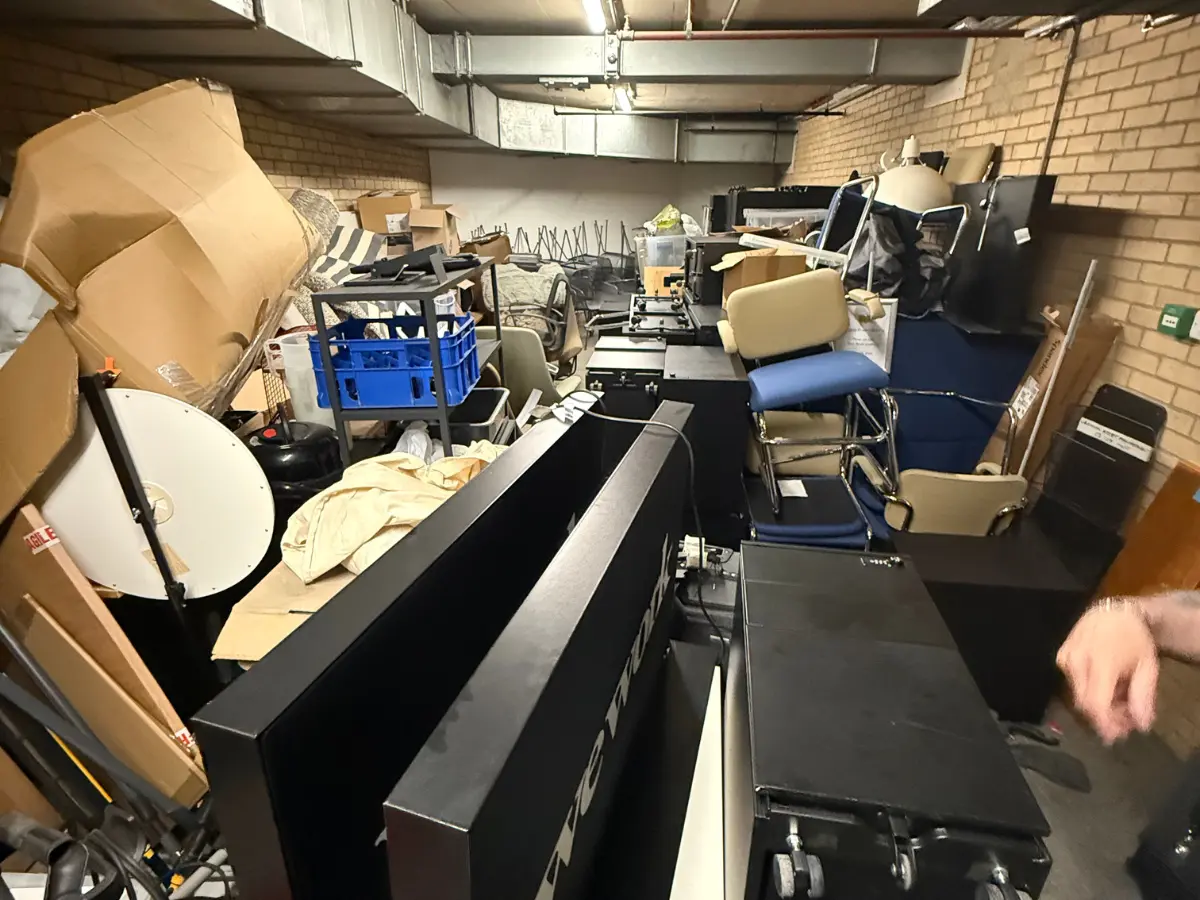
Walk through every room and list all office furniture that needs to be cleared. Include each desk, office chair, meeting table, cupboard, shelving unit and reception item. Check inside filing cabinets and storage areas because these are often overlooked until clearance day.
Clarify whether any fixtures belong to the landlord. Built-in cupboards, kitchen units and fixed shelving may need to remain, while freestanding furniture usually has to be removed. Check the lease or inventory before authorising the clearance team to take anything.
Quantities of the same item should be recorded clearly. For example, 20 old office chairs or several desks of the same style may have resale or reuse value. Accurate quantities also help clearance companies calculate vehicle space and prepare their quotes.
Can Office Furniture Be Reused or Resold?
Furniture in good condition should be assessed before disposal. Some items can be moved to the new workplace, donated to a community organisation or offered to employees. Reuse reduces waste and may lower the overall cost of the office clearance.
There is also a market for second-hand office furniture, particularly for desks of the same style and in good condition. However, businesses may need several weeks to find a buyer, arrange collection and complete the sale. Resale should therefore be considered early rather than immediately before the lease ends.
Ask contractors about their process in terms of reuse and recycling and whether rebates are likely for valuable items. The second-hand office furniture market can change, so a rebate should never be assumed until the items have been inspected.
How Should Furniture and IT Equipment Be Separated?
Office furniture and IT equipment should be listed separately because they follow different removal and disposal routes. Furniture may be reused, dismantled or recycled, while electrical and electronic equipment must be processed according to WEEE requirements.
Create an inventory of each desktop computer, monitor, printer, telephone and laptop. Record whether the item will move to the new office, go into storage or need to be cleared. Small electrical items, cables and chargers should also be collected from drawers and cupboards.
Waste electronics and electrical equipment should not be mixed with general rubbish. An experienced office clearance specialist can arrange appropriate WEEE processing and provide information about where the electrical equipment will be taken.
What Should Happen to Confidential Waste?
Documents containing employee, customer or financial information must be treated as confidential. Check desks, archives, filing cabinets, drawers and storage boxes for paperwork that should not leave the property with ordinary office waste.
Confidential waste should be securely shredded or transported to an authorised facility. Ask the contractor whether secure document destruction is included in the office clearance process and whether a certificate can be supplied.
Hard drives, laptops and storage devices may also contain confidential data. Deleting visible files is not always sufficient. Arrange secure data wiping or physical destruction before allowing these items to be reused or sent for disposal.
How Should General Waste and Hazardous Waste Be Managed?
Separate general waste from recyclable materials, electrical items and hazardous waste. Ordinary office rubbish may include packaging, stationery and non-confidential paper. Commercial waste should still be collected by an authorised provider and taken through approved waste disposal routes.
Hazardous waste can include chemicals, fluorescent tubes, cleaning products, batteries and some printer consumables. These items should be identified before booking an office clearance because they may require a specialist collection. Do not place unknown liquids or hazardous materials in mixed rubbish.
A responsible contractor should follow the 4 ‘R’s: reduce, reuse, recycle and recover. This helps limit the amount of waste sent to landfill and gives reusable equipment a better chance of remaining in use.
How Do You Choose the Right Clearance Firm for the Job?
Compare office clearance companies using the same inventory, photographs and access information. This helps you receive comparable quotes from different contractors. Explain whether the job involves stairs, lifts, loading restrictions, dismantling or a fixed clearance date.
The clearance firm for the job should be insured and registered as a licensed waste carrier. Ask contractors to provide evidence of their registration and explain where the materials will be taken. The cheapest quote may not include labour, recycling, WEEE processing or documentation.
A professional office clearance firm should confirm how many people and Luton van loads may be required. A larger project could involve three Luton van loads or more, while a small office may need only one vehicle. The estimate should be based on the actual volume rather than floor size alone.
What Should Be Confirmed When Booking an Office Clearance?
When booking an office clearance, confirm the collection date, arrival window, parking arrangements and building access. Tell reception, security and the landlord when the contractor will be on site. Loading bays and lifts may need to be reserved.
Provide a clear plan showing which items must stay and which need to be cleared. Labels or coloured stickers can reduce mistakes, particularly when the business is keeping some equipment. Staff should remove personal belongings before the team arrives.
Confirm whether dismantling, carrying, loading, recycling and waste removal are included. You should also ask what happens if additional items are found after the original quotation.
What Should Happen on Clearance Day?
On clearance day, the office manager should meet the team and walk through the property. Confirm each room and identify anything that must not be removed. Access routes should be clear so furniture can be carried safely.
Monitor progress throughout the day rather than waiting until the end. Check emptied cupboards, kitchens, storage rooms and shared areas as the work proceeds. This makes it easier to correct any misunderstanding while the clearance companies are still on site.
Once the main office clearance is complete, inspect the loading and parking areas for loose packaging or rubbish. The building should be left ready for any cleaning, repairs or final landlord inspection.
What Should You Check Before the Final Handover?
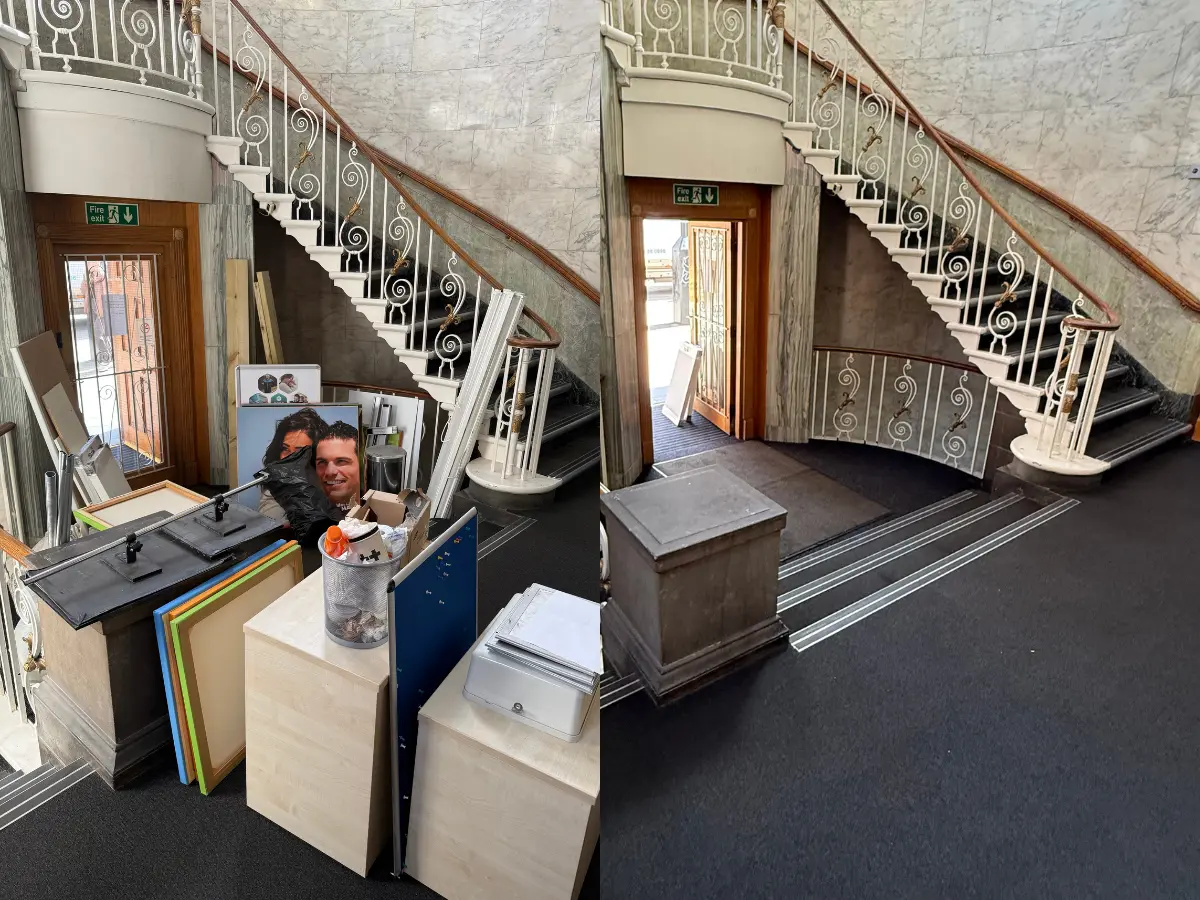
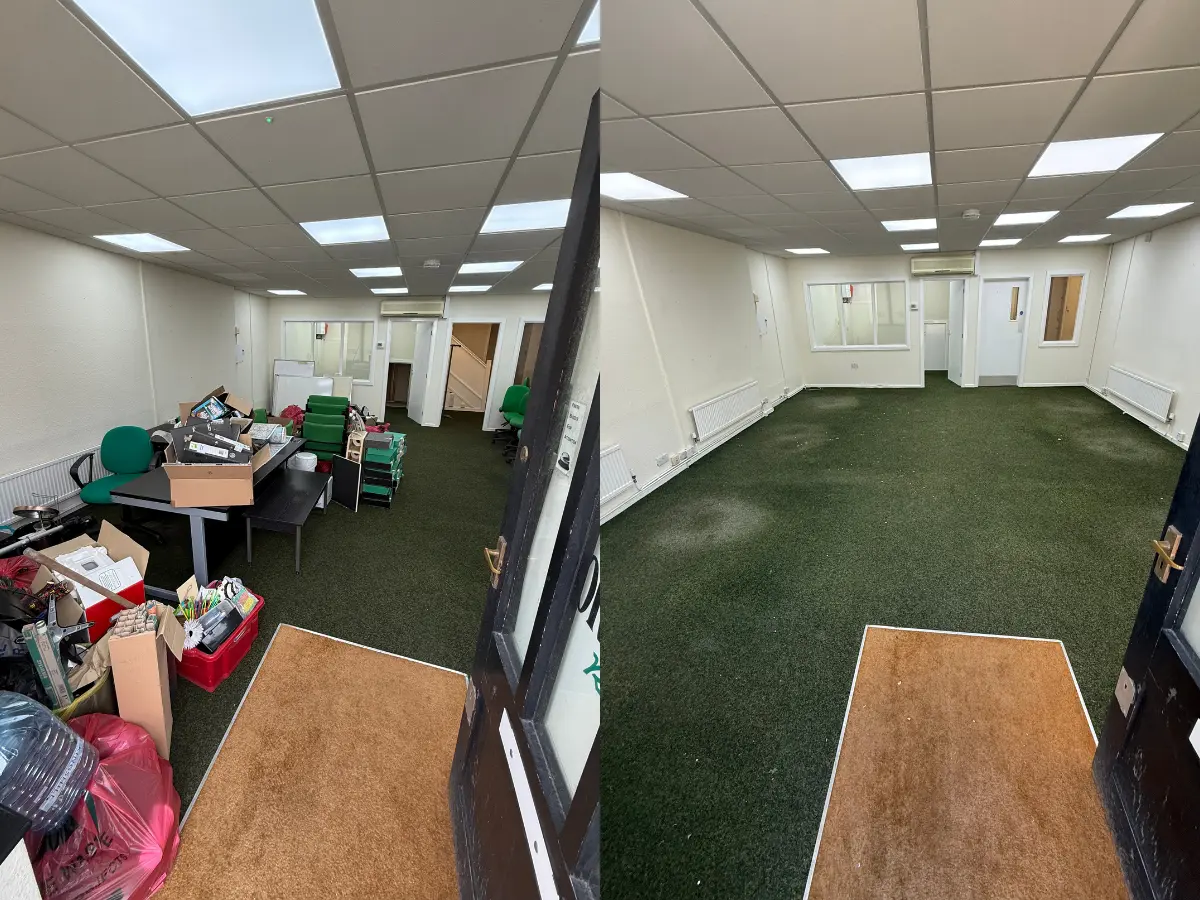
Complete a room-by-room inspection before handing the old office back to a landlord. Check behind doors, inside cupboards, beneath sinks and above suspended storage areas. Small items are easily missed during a busy office move.
Confirm that all furniture and IT equipment listed for removal has gone. Check that no commercial waste, printer equipment or confidential paperwork remains. Photograph the empty office space to create a record of its condition before the handover.
Review the lease requirements as well. The property may need cleaning, signage removal, minor repairs or reinstatement work in addition to the office clearance. Returning the keys does not always end your responsibility if the agreed conditions have not been met.
Which Clearance Documents Should You Keep?
After the contractor has completed the work, you should receive a waste transfer note. This records the waste collected, the parties involved and the transfer date. Retain it with your business records as evidence that the materials were passed to a licensed waste carrier.
You may also receive WEEE records, confidential destruction certificates or recycling reports. These documents can support your business’s environmental policies and demonstrate responsible disposal.
Before approving the final invoice, compare the completed work with the quotation. Confirm that everything has been removed, documentation has been supplied and no additional charges are unexplained.
Office Clearance Checklist: Final Points to Remember
-
Work backwards from the handover date and allow contingency time.
-
Appoint one person to manage the office clearance.
-
Separate items into keep, relocate, reuse, sell, recycle and dispose groups.
-
Check every desk, cupboard and filing cabinet.
-
List office furniture and IT equipment separately.
-
Arrange secure destruction for confidential documents and data.
-
Declare hazardous waste before the booking.
-
Compare like-for-like quotations from clearance companies.
-
Check that the contractor is a licensed waste carrier.
-
Inspect every room before handing the keys back.
-
Photograph the cleared premise and retain the waste transfer note.
WasteXpress
Get in touch with our friendly team, we provide accurate quotes within 5 mintues!
Table of Contents
REad more
An office clearance involves more than taking away desks and emptying cupboards. Before returning a commercial premise to a landlord,...
An office clearance can become complicated when desks, storage, electrical equipment and confidential documents all need removing together. This guide...
Clearing a workplace in Wigan can involve far more than removing a few desks. Businesses may need to manage furniture,...
Whether you're clearing out your home, renovating a property, or simply need unwanted waste collected quickly, finding a reliable rubbish...

